Which Is the Best Dental Implant in 2025-2026?
The question “Which is the best dental implant?” comes up naturally when you want a solution that is safe, long-lasting, and highly aesthetic for replacing missing teeth. However, the most accurate answer is not a single brand name: there isn’t one universal “best implant” for everyone. The right choice depends on your individual situation—bone quality and volume, gum and smile aesthetics, the final prosthetic plan, overall health, and budget. In 2025–2026, modern implant dentistry is increasingly built around predictability, digital planning, and personalized protocols. A top-tier implant placed in the wrong case (or restored incorrectly) can lead to poor results, while a well-designed treatment plan performed by an experienced team can deliver excellent long-term outcomes.
What makes implants different from one another?
Most dental implants are made from titanium or other biocompatible materials (in certain cases, zirconia/ceramic). The real differences often come from:
- Implant design (shape, thread pattern, connection type)
- Surface treatment (engineered to support faster or more reliable osseointegration)
- Prosthetic ecosystem (how well the implant integrates with abutments, crowns, bridges, and full-arch systems)
- Compatibility with digital workflows (3D planning, guided surgery, CAD/CAM solutions)
In practice, many implantologists work with a smaller set of systems they know extremely well, because each system has its own instruments, protocols, and prosthetic components. Consistency and experience matter as much as the product itself.
“The best implant” is more than the screw in the bone
Dental implant treatment is not only the surgical placement. A complete, high-quality implant solution typically includes:
- Initial consultation and diagnosis
- Imaging and planning (often including 3D imaging)
- Surgical placement (sometimes guided)
- Temporary restoration (if indicated)
- Final restoration (crown/bridge/full-arch)
- Follow-ups and long-term maintenance
The total cost and outcome are influenced by multiple factors: the implant brand and model, the type of abutment, the material of the final crown/bridge, laboratory work, imaging, planning, and most importantly, the skill and experience of the clinical team (implant surgeon + restorative dentist + dental technician).
Modern selection criteria: technical + aesthetic
If you want a predictable, “premium” result, focus on these core criteria:
- Implant material: titanium, titanium–zirconium alloys, or zirconia (ceramic), depending on the indication and aesthetic priorities.
- Implant surface: specialized treatments that can support osseointegration and healing.
- Design and stability: tailored to your bone density and bite forces.
- Aesthetics: especially important in the front teeth zone; in certain cases zirconia-based solutions can offer an exceptionally natural look.
- Placement technology: digital planning and guided surgery may increase precision and reduce risks.
- Prosthetic plan from day one: the final crown/bridge/full-arch strategy should guide the entire treatment, not the other way around.
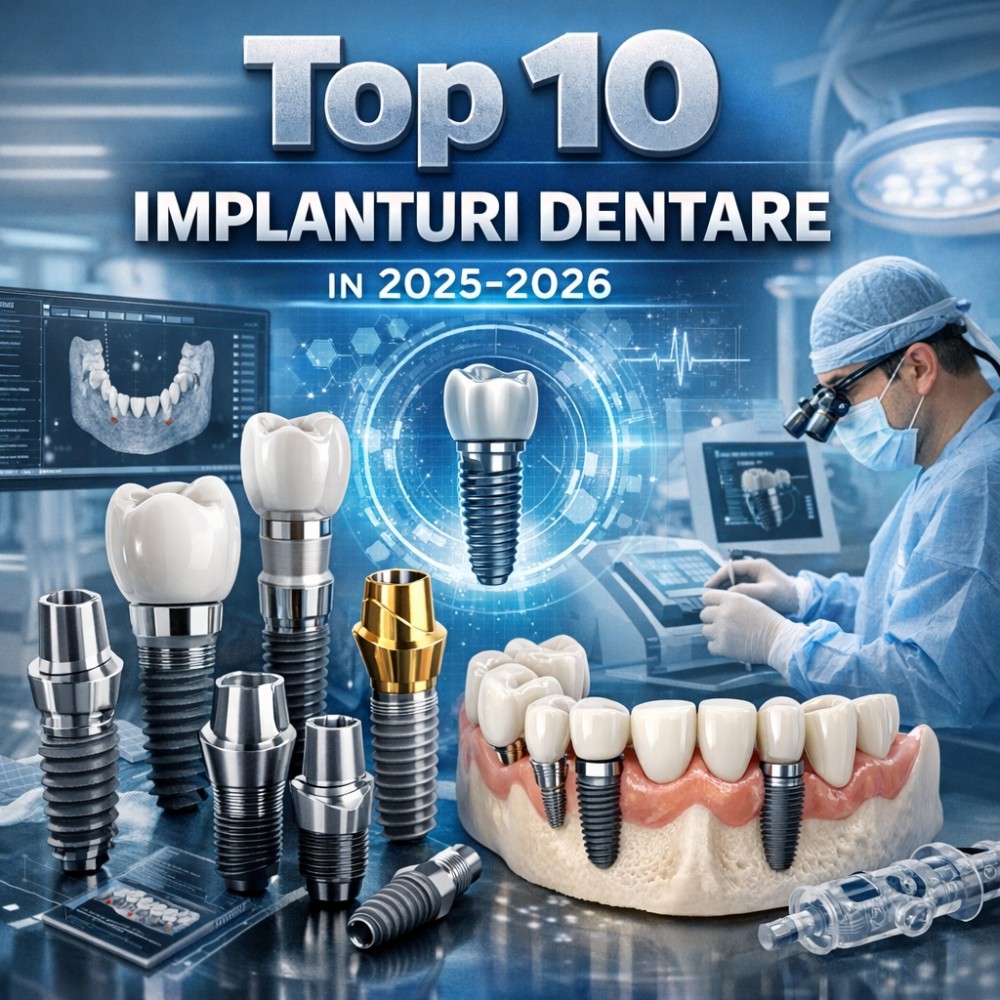
Top 10 dental implant brands (an orientative list for 2025–2026)
There are many implant brands on the market, but some are consistently considered “top tier” due to reputation, long-term clinical use, quality control, and broad prosthetic solutions. Here is an orientative list that many premium clinics commonly reference:
- Straumann (Switzerland)
A global premium leader, known for innovation and highly reliable long-term performance, including in demanding cases. - Nobel Biocare (Switzerland/USA)
A pioneer in implant dentistry and widely associated with complex full-arch rehabilitation concepts such as All-on-4. - Zimmer Biomet (USA)
Recognized for reliability and versatility, suitable for both straightforward cases and complex reconstructions. - MegaGen (South Korea)
Known for innovative implant design and strong clinical adoption, often chosen for stability in modern workflows. - Dentsply Sirona (USA/Germany)
Strong emphasis on digital integration—planning, guided surgery, and restorative workflows—valuable in advanced implant cases. - BioHorizons (USA)
Often selected for biologically oriented protocols and a focus on optimizing integration and bone management. - Bredent (Germany)
Frequently associated with comprehensive rehabilitation solutions, including fast fixed concepts for full-arch cases. - Osstem (South Korea)
Widely used globally, commonly valued for solid reliability and accessibility across a broad range of indications. - Bicon (USA)
An interesting option in specific situations, especially when anatomical limitations require alternative approaches. - Hiossen (USA/South Korea)
A modern system used in many clinics, offering a wide range of solutions supported by advanced manufacturing.
When the “best implant” changes completely
In cases of severe bone loss, conventional implants may not be ideal without advanced bone grafting. In certain situations, alternative solutions may be considered, such as:
- Subperiosteal implants (custom frameworks placed on top of bone, under the gums)
- Zygomatic implants (anchored in the cheekbone for extreme upper jaw resorption)
In these scenarios, “the best implant” means the safest and most suitable solution for your anatomy and long-term stability, not a particular brand.
The real conclusion: the plan and the team matter most
Top implant brands often come with higher costs because of research, quality control, and proven systems. But long-term success is strongly influenced by:
- Accurate diagnosis and planning
- Proper surgical placement (position, angulation, stability)
- Correct restorative design (bite, load distribution, hygiene access, aesthetics)
- Ongoing maintenance and professional follow-up
A poorly designed or poorly fitted restoration can overload implants, compromise gum health, reduce aesthetics, and shorten longevity—even if the implant itself is excellent.
A practical way to answer: “Which implant is best for me?”
Choose a clinic that:
- Evaluates bone and anatomy properly (often with 3D imaging)
- Builds the prosthetic plan first (crown/bridge/full-arch)
- Explains options clearly, including alternatives and risks
- Uses proven protocols and offers long-term follow-up
In the end, the best dental implant for you is the one that fits your case and is delivered through a precise, complete protocol: right indication + correct placement + correct restoration + proper maintenance.