
Histamine Intolerance: From Apparently Unexplained Symptoms to Cellular Mechanisms, the Microbiome and a Personalized Approach
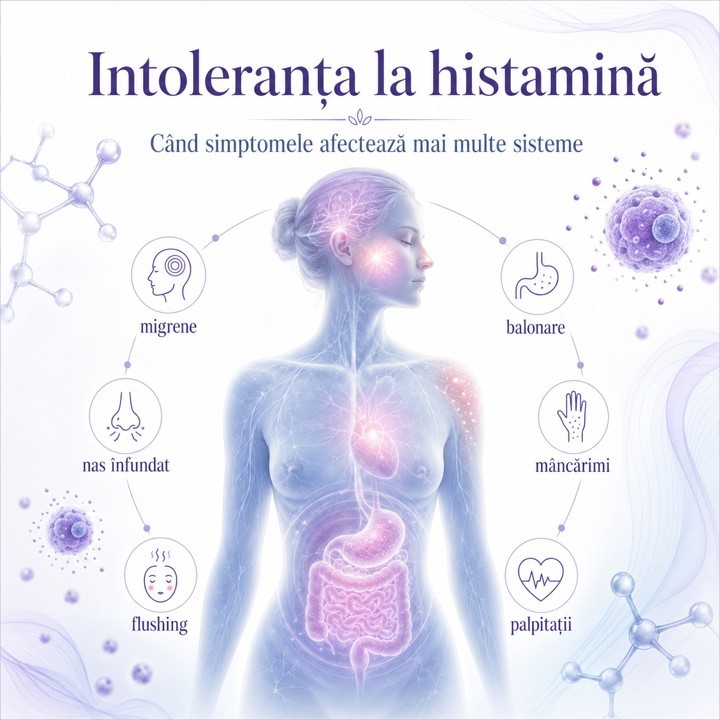
Histamine intolerance is a complex condition in which the body is unable to efficiently degrade histamine coming from food, produced by the microbiome, or released from its own immune cells. The result is the accumulation of histamine above the individual tolerance threshold, with the appearance of digestive, skin, respiratory, neurological or cardiovascular symptoms. Recent literature describes histamine intolerance as a multisystemic condition, difficult to diagnose through a single test, requiring correlation between symptoms, diet, medical history and response to dietary interventions.
For many patients, the manifestations are difficult to understand: bloating, diarrhea or constipation, migraines, itching, urticaria, nasal congestion, palpitations, anxiety, insomnia or flushing after certain foods. Sometimes allergy tests are negative and routine laboratory tests appear normal, but the patient clearly feels that they react to food, stress, alcohol, fermented foods or probiotics.
Histamine is not a “bad” substance. It has essential roles in immunity, gastric secretion, vascular regulation, the nervous system and cell-to-cell communication. The problem appears when the production, intake or release of histamine exceeds the body’s capacity to degrade it.
What is histamine and how is it degraded?
Histamine is a biogenic amine produced from the amino acid histidine. In the body, it is stored mainly in mast cells and basophils, cells involved in allergic, inflammatory and immune reactions. Histamine can be released in allergies, infections, inflammation, stress, tissue trauma, mast cell activation or upon contact with certain dietary triggers.
There are two important pathways through which the body degrades histamine:
DAO — diamine oxidase, the main enzyme responsible for degrading histamine coming from food, active mainly at intestinal level.
HNMT — histamine-N-methyltransferase, an enzyme mainly involved in the metabolism of intracellular histamine within tissues.
In histamine intolerance, the problem is often related to insufficient DAO activity, but not only to this. Dysbiosis, intestinal inflammation, SIBO, mucosal permeability, medications, micronutrient deficiencies, genetics, hormones and stress can all contribute simultaneously to exceeding the tolerance threshold. DAO is largely synthesized by mature enterocytes of the intestinal villi, which explains why intestinal mucosal health is central to histamine tolerance.
Why is the gut essential in histamine intolerance?
The gut is the place where three important sources of histamine meet: dietary histamine, histamine produced by bacteria and histamine released through local inflammation.
A healthy intestinal mucosa produces DAO, maintains the intestinal barrier and limits the passage of inflammatory molecules. When this mucosa is affected by inflammation, dysbiosis, infections, SIBO, food sensitivities, chronic stress or medications, the capacity to degrade histamine may decrease.
In this context, the patient may begin to react to apparently healthy foods: tomatoes, avocado, spinach, citrus fruits, fish, yogurt, kefir, aged cheeses, pickles, chocolate, wine, fermented foods or even leftovers stored in the refrigerator.
The problem is not always the food itself. Very often, the problem is the biological terrain in which that food arrives: an inflamed intestine, an imbalanced microbiome, reduced DAO activity or a hyperreactive mast cell system.
Histamine-producing intestinal flora
Histamine does not come only from food. Part of the histamine burden can be produced directly in the gut by certain bacteria. Some microorganisms can transform histidine into histamine through enzymes called histidine decarboxylases.
In a balanced microbiome, this production is usually controlled. In dysbiosis, SIBO, excessive fermentation, slow transit or intestinal inflammation, bacterial histamine production may become clinically relevant. Studies discuss the role of the microbiome in histamine intolerance both through histamine-producing bacteria and through its effect on inflammation and the intestinal barrier.
Among the bacteria discussed as potential producers of histamine or biogenic amines are certain strains from the genera Lactobacillus, Enterococcus, Morganella, Klebsiella, Proteus and Hafnia. It is very important to understand that not all bacteria within the same genus behave in the same way. The strain, the intestinal context and the body’s capacity to metabolize histamine all matter.
For example, certain strains of Lactobacillus reuteri can convert histidine into histamine with complex immunological effects. This explains why a probiotic may be useful for one patient and poorly tolerated by another.
Probiotics and histamine: when “good flora” is not good for everyone
Probiotics should not be recommended generically in histamine intolerance. Some people with histamine sensitivity report worsening symptoms after probiotics: bloating, migraines, flushing, palpitations, itching, insomnia or anxiety. This does not mean that probiotics are bad, but that the choice of strain, dose and timing of introduction matters.
The strains discussed with caution in a histamine context include especially:
- Lactobacillus reuteri;
- Lactobacillus casei;
- Lactobacillus delbrueckii subsp. bulgaricus;
- Lactobacillus bulgaricus;
- certain strains of Lactobacillus helveticus;
- certain strains of Enterococcus faecalis or Enterococcus faecium;
- complex formulas with many strains, where the profile of biogenic amine production is unclear.
In general, in patients with histamine reactions, formulas based on Bifidobacterium are often better tolerated, such as Bifidobacterium longum, Bifidobacterium infantis, Bifidobacterium breve or Bifidobacterium bifidum. However, even here, absolute generalization should be avoided. The strain, product, excipients, dose and the patient’s condition at the time of administration all matter.
The practical rule is gradual introduction: small doses, one product at a time, careful monitoring. If the patient is in a severe flare of intolerance, with multisystemic symptoms, it may be more prudent to first calm inflammation and reduce the histamine burden before aggressive interventions on the microbiome.
DAO / AOC1 genetic testing: predisposition, not a sentence
DAO is encoded by the AOC1 gene. Certain genetic variants of AOC1 may be associated with reduced DAO activity and predisposition to symptoms of histamine intolerance. Recent studies have analyzed AOC1 polymorphisms in people with symptoms of histamine intolerance and have reported an increased frequency of certain variants associated with lower DAO activity.
However, genetic testing alone does not establish the diagnosis. It shows a predisposition, not necessarily active disease.
A person may have AOC1 variants and still have no major symptoms if they have a healthy gut, a balanced microbiome, appropriate nutrition and a low histamine burden. Conversely, a person without significant genetic variants may develop symptoms if they have intestinal inflammation, dysbiosis, SIBO, cofactor deficiencies, medications that inhibit DAO or a high intake of histamine-rich foods.
Therefore, genetic testing must be interpreted together with:
- the patient’s symptoms;
- the food diary;
- the response to a low-histamine diet;
- serum DAO level, if tested;
- microbiome status;
- the presence of SIBO;
- inflammatory status;
- medications;
- micronutrients;
- hormonal and metabolic context.
In other words, genetics can increase vulnerability, but clinical expression depends on the biological terrain.
When should histamine intolerance be suspected?
Histamine intolerance should be considered when symptoms are recurrent, appear after certain foods or situations, and affect several systems of the body.
Suggestive signs include:
- facial flushing after wine, aged cheeses, tomatoes, avocado, fish, chocolate or fermented foods;
- migraines or headaches after certain meals;
- palpitations, tachycardia, anxiety or agitation after apparently normal foods;
- nasal congestion, runny nose, sneezing or sinus pressure without a clear allergy;
- itching, urticaria, dermatographism or worsening rosacea;
- bloating, cramps, diarrhea, reflux or discomfort after meals;
- symptoms that worsen before menstruation, during perimenopause or during periods of stress;
- negative allergy tests, but real food reactions;
- reactions to probiotics, fermented foods, alcohol or leftovers;
- tolerating a food one day, but reacting to the same food on another day;
- the feeling that “I can no longer tolerate anything”, while routine tests do not explain the clinical picture.
An important clue is the threshold effect. Histamine works like a “glass that fills up.” On the same day, several factors can add up: histamine-rich food, stress, poor sleep, alcohol, intestinal inflammation, hormonal cycle, medications, intense exercise or heat. Each factor adds a little, and at some point the body can no longer compensate.
The symptoms described in clinical literature include digestive, skin, respiratory, neurological and cardiovascular manifestations, but the diagnosis should be made after excluding other possible causes.
Why histamine intolerance is not a classic allergy
Histamine intolerance is not the same as IgE-mediated food allergy.
In a classic allergy, the immune system reacts specifically to an allergen, and allergy tests may sometimes identify IgE antibodies or specific skin reactions. In histamine intolerance, the problem is mainly one of accumulation and insufficient degradation: the body receives, produces or releases more histamine than it can metabolize.
This is why a patient may have negative allergy tests but real symptoms after certain foods. This does not mean that the symptoms are imaginary. It means that the mechanism is not that of a classic allergy.
Factors that favor histamine intolerance
Histamine intolerance is rarely isolated. It usually appears on a vulnerable biological terrain.
Contributing factors may include:
- reduced DAO activity;
- AOC1 genetic variants;
- intestinal inflammation;
- dysbiosis;
- SIBO;
- increased intestinal permeability;
- previous digestive infections;
- hypochlorhydria;
- gastritis;
- frequent alcohol consumption;
- a diet rich in fermented, aged or preserved foods;
- chronic stress;
- insufficient sleep;
- estrogen fluctuations;
- mast cell activation;
- certain medications that may reduce histamine degradation;
- deficiencies of vitamin C, vitamin B6, copper, zinc, magnesium or other micronutrients.
Estrogens can influence mast cell response and may explain why some female patients have more intense symptoms premenstrually, during perimenopause or during periods of hormonal imbalance.
Vitamin, mineral and micronutrient deficiencies that may contribute
Histamine metabolism depends on enzymes, cofactors, a healthy intestinal mucosa and efficient antioxidant mechanisms. Nutritional deficiencies may reduce the body’s capacity to handle histamine.
The most important to evaluate are:
Vitamin C — supports histamine degradation and antioxidant defense. Deficiency may increase vulnerability to histamine reactions.
Vitamin B6 — an important cofactor in the metabolism of biogenic amines and in supporting enzymatic activity.
Copper — DAO is a copper-dependent enzyme. Copper deficiency may reduce the efficiency of histamine degradation. However, copper should not be supplemented randomly, because excess can be toxic.
Zinc — important for the intestinal barrier, immunity and mucosal repair. It does not directly degrade histamine, but it may support the intestinal terrain.
Magnesium — useful for stress regulation, sleep, intestinal transit and neuromuscular excitability.
Vitamin D — relevant for immunity, inflammation and intestinal barrier integrity.
Vitamin B12 and folate — important for methylation, the nervous system and cellular metabolism.
Iron and ferritin — deficiency contributes to fatigue, exercise intolerance and general vulnerability.
Insufficient protein intake — affects mucosal repair, enzymes, detoxification and immune function.
Insufficient omega-3 intake — may favor a pro-inflammatory terrain.
The literature discusses especially the role of vitamin C, vitamin B6 and copper in histamine metabolism and DAO function, but interpretation must be individualized and made in clinical context.
How is histamine intolerance diagnosed?
There is no single perfect test for histamine intolerance. Diagnosis is clinical, integrative and stepwise.
The evaluation may include:
- history of symptoms;
- relationship between symptoms and foods;
- food and symptom diary;
- exclusion of IgE-mediated allergies;
- exclusion of celiac disease, inflammatory bowel disease or other digestive pathologies;
- evaluation of the microbiome and dysbiosis;
- SIBO testing, if there is bloating, excessive fermentation or altered bowel transit;
- inflammatory markers;
- nutritional markers;
- serum DAO, interpreted with caution;
- AOC1 genetic testing, where relevant;
- a time-limited low-histamine diet, followed by controlled reintroduction.
Serum DAO can provide information, but it should not be interpreted in isolation. A normal result does not completely exclude histamine intolerance, and a low result must be correlated with the patient’s symptoms and context.
Treatment of histamine intolerance
Treatment should not be reduced to a long list of forbidden foods. The real goal is to reduce the histamine burden, increase the capacity for degradation and restore tolerance.
1. Time-limited low-histamine diet
A low-histamine diet may be useful for 2–6 weeks, depending on symptom severity. Fermented, aged and preserved foods, alcohol, vinegar, aged cheeses, processed meats, canned or improperly stored fish, kombucha, soy sauce, pickles, chocolate and foods to which the patient clearly reacts are temporarily reduced.
Food should be as fresh as possible. Histamine increases with storage time, especially in protein-rich foods. In sensitive patients, the same meat may be tolerated when freshly cooked, but poorly tolerated after two days in the refrigerator.
A low-histamine diet may be useful, but the literature emphasizes that protocols are not perfectly standardized and excessive restriction should be avoided.
2. Controlled reintroduction
After symptoms improve, foods are gradually reintroduced. The goal is not lifelong elimination, but identifying the personal tolerance threshold.
A very restrictive diet maintained for months or years can reduce dietary diversity, affect the microbiome and increase food-related anxiety.
3. DAO support
DAO supplementation before meals may help some patients degrade dietary histamine. Clinical studies reviewed in recent literature suggest benefits of oral DAO in some people with symptoms of histamine intolerance, although the effect varies and it does not replace treatment of the underlying causes.
DAO may be especially useful in specific situations: eating out, events, periods of food reintroduction or unavoidable exposures.
4. Correction of dysbiosis, SIBO and intestinal inflammation
If dysbiosis, SIBO, slow transit, intestinal inflammation or increased permeability are present, they must be addressed. Otherwise, diet may temporarily reduce symptoms, but the mechanism remains active.
5. Careful selection of probiotics
Probiotics must be personalized. Simultaneous introduction of multiple strains should be avoided, and small doses increased gradually are preferred. In cases with clear reactions to probiotics or fermented foods, treatment should begin with stabilizing the patient, not with aggressively stimulating the microbiome.
6. Mast cell stabilization and reduction of inflammation
In patients with flushing, urticaria, itching, rhinorrhea, migraines or palpitations, there may be a mast cell activation component. In these cases, the strategy may include reducing triggers, supporting the intestinal barrier, correcting oxidative stress, stress management and, when necessary, collaboration with an allergist or another specialist.
Supplements that may help reduce the histamine burden
Supplements should be chosen individually, according to symptoms, laboratory tests, medications and tolerance.
Possible options include:
DAO — useful for dietary histamine, taken before meals.
Vitamin C — supports histamine degradation and antioxidant defense.
Vitamin B6 — an important cofactor for amine metabolism.
Copper — necessary for DAO, but only when indicated and monitored.
Zinc — supports the intestinal barrier and immune function.
Magnesium — useful for stress, sleep, intestinal transit and hyperexcitability.
Quercetin — a flavonoid with potential mast cell-stabilizing effects.
Luteolin — a flavonoid discussed for anti-inflammatory and mast cell-related effects.
Omega-3 — background anti-inflammatory support.
N-acetylcysteine / glutathione — may support antioxidant mechanisms, but should be introduced cautiously in highly reactive patients.
Fiber and prebiotics — useful for the microbiome, but with caution in SIBO or severe bloating, because they may worsen fermentation if introduced too quickly.
There is no universal protocol. In histamine intolerance, “more supplements” does not necessarily mean better. The reactive patient needs gradual, clear and monitored interventions.
What should be avoided
Patients should avoid aggressive self-medication with:
- multiple probiotics;
- antimicrobial supplements taken randomly;
- very restrictive long-term diets;
- simultaneous elimination of many foods without a reintroduction plan;
- copper supplementation without testing;
- SIBO treatments without diagnosis;
- isolated interpretation of genetic tests;
- the conclusion that “everything is histamine” without excluding other causes.
Histamine intolerance may resemble allergies, irritable bowel syndrome, SIBO, migraine, anxiety, dysautonomia, perimenopause or mast cell activation. This is why evaluation must be careful.
Conclusion
Histamine intolerance is not just a reaction to a few foods. It is a loss of biological tolerance, located at the intersection between the gut, microbiome, DAO enzyme, AOC1 genetics, mast cells, inflammation, oxidative stress, hormones and micronutrients.
The correct approach does not mean fear of food and endless lists of restrictions. It means identifying sources of histamine, evaluating degradation capacity, correcting dysbiosis and inflammation, supporting the intestinal barrier and gradually restoring food tolerance.
At NutriMedX – Functional and Regenerative Medicine, the evaluation of histamine intolerance is integrated into a functional and personalized perspective, correlating the patient’s symptoms with nutrition, the microbiome, inflammation, metabolism, micronutrients and the cellular mechanisms that may maintain the loss of tolerance.
When the body reacts to more and more foods, the solution is not endless restriction, but understanding the mechanisms that led to the loss of tolerance.
References
- Jochum C. et al. Histamine Intolerance: Symptoms, Diagnosis, and Beyond.
- Jackson K. Evidence for Dietary Management of Histamine Intolerance.
- Sánchez-Pérez S. et al. The dietary treatment of histamine intolerance reduces the abundance of some histamine-secreting bacteria of the gut microbiota in histamine intolerant women.
- Alemany-Fornés M. et al. Diamine oxidase deficiency: implications for health, current evidence and future perspectives.
- Song E.J. et al. Personalized Diets based on the Gut Microbiome as a Target for Health Maintenance and Disease Prevention.
- Sarfraz M.H. et al. Personalized nutrition, microbiota, and metabolism.
- Kallapura G. et al. Microbiota-based personalized nutrition improves hyperglycaemic and hyperlipidaemic parameters.