
Insulin Resistance — When Your Body Stops Listening to Its Own Signals
What Is Insulin Resistance and Why Is It So Often Overlooked
Insulin resistance is one of the most prevalent metabolic dysfunctions of the 21st century — and, paradoxically, one of the most tardily diagnosed.
Millions of people live with insulin resistance for years without knowing it. Their fasting glucose is normal. Their doctor tells them everything is fine. Yet their body sends clear signals that something is not functioning optimally — fatigue after meals, intense carbohydrate cravings, weight accumulating around the abdomen, difficulty concentrating, unrefreshing sleep.
Understanding insulin resistance — what it is, how it develops, and what can be done about it — is essential for anyone who wants to protect their metabolic health over the long term.
How Insulin Works Under Normal Conditions
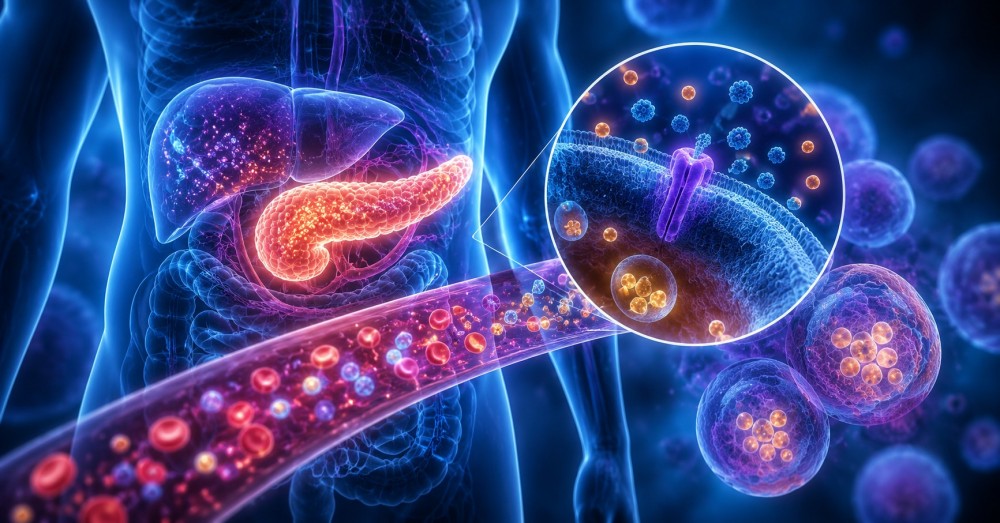
Insulin is a hormone produced by the pancreas with a fundamental role: it allows cells to take up glucose from the bloodstream and use it as fuel.
When you eat, blood glucose rises. The pancreas responds by secreting insulin. Insulin "knocks on the door" of muscle, liver, and fat cells, signalling that glucose is available. The cells open their "door," take up the glucose, blood glucose falls, and everything returns to equilibrium.
This elegant mechanism works perfectly under normal conditions.
What Happens in Insulin Resistance
In insulin resistance, cells no longer respond efficiently to insulin‘s signal. The "door" no longer opens as readily.
The pancreas compensates by producing more insulin — to force the same effect. Blood glucose remains apparently normal, but circulating insulin levels are elevated. This is compensatory hyperinsulinaemia — the first and most important stage of insulin resistance.
Over time, the pancreas becomes exhausted. Compensation becomes insufficient. Blood glucose begins to rise — first postprandially, then fasting. Prediabetes appears. Then type 2 diabetes.
But insulin resistance is not merely a precursor to diabetes. It is a systemic metabolic dysfunction with consequences that extend far beyond glycaemia.
Why Insulin Resistance Is Much More Than "Pre-Diabetes"
Insulin is one of the most potent anabolic hormones in the body. When insulin levels are chronically elevated, the effects are felt throughout the entire organism:
The cardiovascular system: hyperinsulinaemia promotes vascular inflammation, endothelial dysfunction, and atherosclerosis — independently of cholesterol.
Sex hormones: elevated insulin stimulates ovarian androgen production — a central mechanism in polycystic ovary syndrome (PCOS/PMOS). In men, insulin resistance is associated with declining testosterone.
The brain: insulin plays a role in cognitive function and neuroprotection. Cerebral insulin resistance is being studied as a risk factor for Alzheimer‘s disease — sometimes referred to as "type 3 diabetes."
The liver: glucose not taken up by cells is converted into hepatic fat — non-alcoholic fatty liver disease is directly linked to insulin resistance.
Inflammation: hyperinsulinaemia activates systemic inflammatory pathways, contributing to low-grade chronic inflammation — the common substrate of most chronic diseases.
The gut microbiome: the relationship is bidirectional. Intestinal dysbiosis contributes to insulin resistance through short-chain fatty acids, bacterial endotoxins, and specific metabolites. In turn, insulin resistance alters the composition of the gut flora.
Symptoms That Suggest Insulin Resistance
Insulin resistance does not hurt. It has no dramatic symptoms in its early stages. But the signals exist — if you know how to recognise them:
- Pronounced fatigue after meals, especially after carbohydrates
- Intense cravings for sweets or carbohydrates 2–3 hours after eating
- Difficulty losing weight, especially around the abdomen
- Accumulation of visceral fat (increased waist circumference)
- "Brain fog" after meals
- Unrefreshing sleep, nocturnal awakenings
- Acanthosis nigricans — velvety hyperpigmentation at the neck, axillae, or groin
- Mildly elevated blood pressure
- Elevated triglycerides and low HDL on blood tests
- Polycystic ovary syndrome in women
How to Diagnose It Correctly
The major problem with standard diagnostics is that fasting glucose and even HbA1c can be normal in the early stages of insulin resistance.
Tests that detect insulin resistance before glycaemic alterations occur:
Fasting insulinaemia — the first marker to change. Values above 10 µIU/mL fasting are suggestive, although laboratory reference ranges are often set much higher.
HOMA-IR index — calculated from fasting glucose and fasting insulin. A HOMA-IR above 2.5 suggests insulin resistance.
Oral glucose tolerance test with insulinaemia (OGTT + insulin) — the most comprehensive functional test. It measures both glycaemia and insulinaemia at 0, 60, and 120 minutes after glucose ingestion. It detects compensatory hyperinsulinaemia even when glycaemia remains normal.
C-peptide — reflects pancreatic insulin secretion and completes the diagnostic picture.
Lipid profile: elevated triglycerides and low HDL are indirect markers of insulin resistance.
Waist circumference: above 80 cm in women and 94 cm in men is an independent metabolic warning sign.
The Causes of Insulin Resistance — A Functional Perspective
Insulin resistance does not arise from nowhere. It is the result of an accumulation of factors acting synergistically:
A hypercaloric diet rich in refined carbohydrates — repeated and excessive insulin stimulation over the long term.
Sedentary lifestyle — muscles are the body‘s primary glucose consumers. Reduced muscle mass and low physical activity dramatically decrease glucose uptake capacity.
Chronic stress — persistently elevated cortisol directly antagonises insulin action and promotes hepatic gluconeogenesis.
Insufficient or poor-quality sleep — even a single night of reduced sleep decreases insulin sensitivity by 20–25%.
Gut dysbiosis — certain intestinal bacteria produce lipopolysaccharides (LPS) that induce systemic inflammation and insulin resistance.
Magnesium deficiency — magnesium is an essential cofactor for insulin receptors. Extremely common deficiency amplifies resistance.
Environmental toxins — endocrine disruptors (BPA, phthalates, pesticides) interfere with insulin signalling.
Low-grade chronic inflammation — regardless of its cause, chronic inflammation inhibits insulin signalling at the cellular level.
The Functional Medicine Approach
Functional medicine does not treat insulin resistance with a single medication. It treats all identified causes simultaneously and in a personalised manner.
Nutrition is the first intervention — not a standard diet, but a protocol adapted to the individual metabolic profile. Glycaemic responses to foods vary significantly between individuals, depending on their microbiome, genetics, and level of physical activity.
Physical activity — particularly strength training and high-intensity intervals — dramatically increases insulin sensitivity by stimulating GLUT4 transporters in muscle tissue.
Sleep optimisation — consistently underestimated, but with a major metabolic impact.
Stress management — not as general advice, but as a specific medical intervention using validated techniques.
Targeted supplementation — magnesium, berberine, inositol (particularly myo-inositol), alpha-lipoic acid, chromium — with appropriate doses and therapeutic forms, not random supplements.
Gut microbiome restoration — addressing intestinal dysbiosis as a causal factor in inflammation and insulin resistance.
Metformin or GLP-1 analogues — when lifestyle intervention is insufficient or when metabolic risk is elevated, pharmacotherapy has its place within the functional protocol.
Insulin Resistance Can Be Reversed
This is the most important message.
Unlike advanced type 2 diabetes, insulin resistance — especially in its early and intermediate stages — responds remarkably well to lifestyle interventions and a well-structured functional protocol.
Patients with a HOMA-IR of 4–5 and significant hyperinsulinaemia have returned to normal insulin sensitivity within 3–6 months through a correct and consistent approach.
Progression to diabetes is not inevitable. It does not have to remain.
But it requires early diagnosis, an understanding of the underlying mechanisms, and an approach that treats causes — not just the number on a test result.
When to Consult a Functional Medicine Physician
If you recognise yourself in the symptoms described above, if you have a family history of type 2 diabetes, metabolic syndrome, or cardiovascular disease, if you have PCOS or carry excess weight around the abdomen — a comprehensive metabolic evaluation including insulinaemia and HOMA-IR is worth pursuing.
Not because you are ill. But because functional prevention means intervening before disease takes hold.
Article by Conf. dr. Sanda Maria Crețoiu NutrimedX — Functional and Regenerative Medicine 51 Dacia Blvd., Bucharest, Romania | nutrimed.center