
Minor Autohemotherapy with Ozone: What It Is and When It May Be Useful
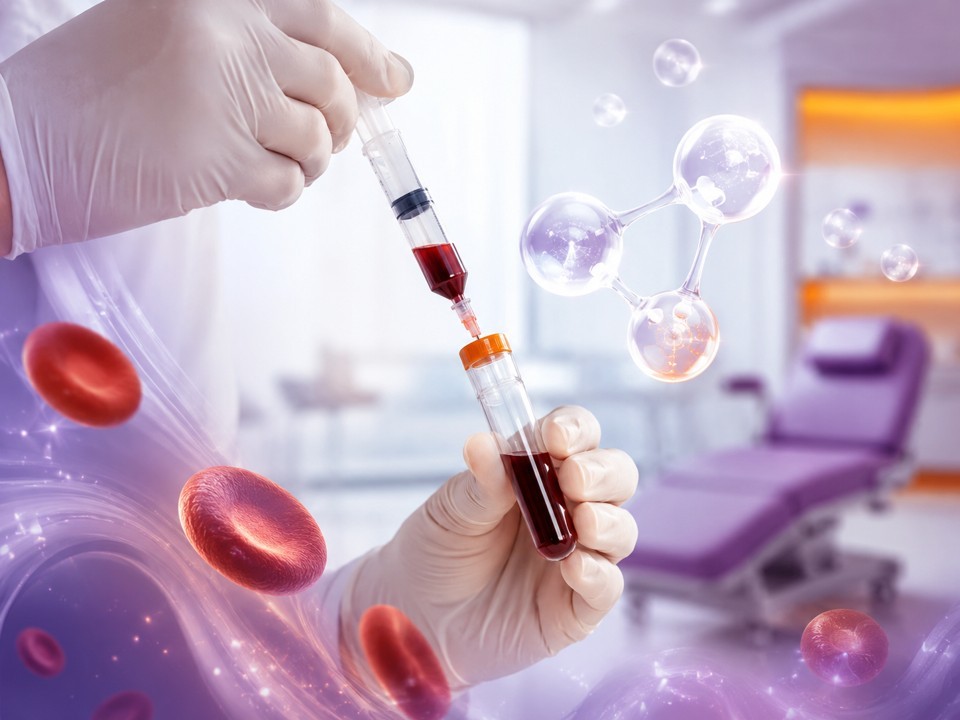
Minor autohemotherapy is one of the methods of administering medical ozone, used in integrative medicine as a way to stimulate and regulate the body’s biological response. Although the procedure itself is technically simple, it must be understood correctly: it is not a “miracle treatment,” it does not replace medical diagnosis, and it does not substitute standard therapies when they are necessary.
Its role is mainly adjuvant, meaning that it may be integrated into a broader medical plan when there is a clear indication, proper clinical evaluation, and appropriate monitoring.
What is minor autohemotherapy?
In minor autohemotherapy, a small amount of venous blood is collected from the patient, mixed with a controlled volume of medical oxygen–ozone, and then reinjected intramuscularly.
This differs from major autohemotherapy, where a larger amount of blood is collected, ozonated in a closed system, and then reinfused intravenously. Minor autohemotherapy is a shorter procedure, used mainly for its potential immunomodulatory effects.
In the scientific literature, minor autohemotherapy is described as a procedure with a possible effect of autologous immune stimulation, through the controlled exposure of blood components to medical ozone.
How does medical ozone act?
Medical ozone does not act simply by “oxygenating” the body, as it is sometimes simplistically described. Its mechanism is more complex.
When ozone comes into contact with blood, it induces a controlled, low-intensity oxidative stimulus, which may activate the body’s natural adaptive mechanisms. This response may include stimulation of the body’s own antioxidant systems, modulation of inflammation, and influence on certain pathways involved in immune response.
In other words, the goal is not to “oxidize” the body, but to use a controlled medical dose in order to trigger an adaptive biological response. This is why concentration, volume, indication, and treatment frequency are very important.
In which situations may it be considered?
Minor autohemotherapy is mainly used as an adjuvant therapy in contexts where regulation of the immune and inflammatory response is desired. In integrative medical practice, it may be considered in:
- recurrent infections or an imbalanced immune terrain;
- frequent viral reactivations, such as recurrent herpes;
- certain allergic or chronic inflammatory manifestations;
- persistent fatigue associated with oxidative stress and low-grade inflammation;
- recovery after infectious episodes, especially when the patient remains tired or highly reactive;
- supporting the body within complex medical programs aimed at metabolic and immune rebalancing.
It is important to emphasize that these uses must be individualized. Not every patient with fatigue, allergies, or recurrent infections automatically has an indication for ozone therapy. The clinical context must first be understood: laboratory results, medical history, previous treatments, diet, sleep, stress level, and associated conditions.
Minor autohemotherapy and the immune system
One of the reasons this procedure is used in integrative medicine is its possible effect on the immune system. Medical ozone may influence the activity of certain cells involved in the body’s defense mechanisms and may modulate inflammatory signaling.
Some studies describe ozone therapy as having effects on redox pathways, inflammation, and immune response, including activation of endogenous antioxidant mechanisms and regulation of inflammatory mediators.
This does not mean that the procedure “boosts immunity” in a nonspecific way. The correct formulation is that it may contribute to modulating the immune response, meaning better regulation of the body’s reactions.
Is it useful for allergies?
In some integrative medicine protocols, minor autohemotherapy is used as an adjuvant in patients with an allergic terrain, recurrent urticaria, or increased immune reactivity. The idea is not that the procedure “cures allergies,” but that it may help regulate an exaggerated immune response.
However, the allergic patient must be properly investigated. Sometimes, allergy-like manifestations may have different causes: food intolerances, intestinal dysbiosis, DAO deficiency, excess histamine, chronic infections, stress, hormonal imbalances, or toxic exposures. Without identifying the mechanism, any treatment remains incomplete.
Is it useful in recurrent infections?
Minor autohemotherapy is often discussed in the context of recurrent infections, especially when the patient experiences repeated herpes episodes, frequent viral infections, or slow recovery after infections.
Experimental and clinical data suggest that ozone therapy may have immunomodulatory effects and may influence the inflammatory response. However, clinical evidence remains heterogeneous, and for many indications, larger and better-controlled studies are still needed.
For this reason, the correct recommendation is caution: ozone therapy may be an adjuvant option, but it should not be presented as a single or guaranteed treatment.
What does the patient feel after the procedure?
Most patients tolerate the procedure well. Sometimes, mild local tenderness may occur at the intramuscular injection site. Depending on the patient’s biological terrain, some may experience transient fatigue, while others may notice improved energy after several sessions.
The response is not identical in all patients. This is precisely why the protocol must be individually adapted according to age, diagnosis, laboratory results, inflammation, metabolic status, and ongoing treatments.
How many sessions are needed?
There is no universally valid number of sessions. In general, the physician establishes the frequency and duration of the protocol according to the therapeutic objective. Sometimes short treatment courses may be recommended; in other cases, the procedure may be integrated into a broader program that also includes diet, correction of nutritional deficiencies, treatment of infections, microbiome regulation, and reduction of inflammation.
It is incorrect to assume that a single session can solve a chronic problem. In persistent conditions, results depend on the entire therapeutic strategy, not on one isolated procedure.
When is minor autohemotherapy not enough?
Minor autohemotherapy does not replace antibiotic treatment when antibiotics are indicated. It does not replace antiviral treatment in severe situations. It does not treat autoimmune diseases on its own and should not be used as a substitute for medical consultation.
It should also not delay proper diagnosis. A patient with chronic fatigue may have anemia, hypothyroidism, iron deficiency, inflammation, chronic infections, sleep apnea, insulin resistance, or other problems that require investigation. A patient with recurrent urticaria may have allergic, digestive, immunological, or metabolic causes. The procedure only makes sense after the clinical picture has been properly understood.
Is it safe?
Medical ozone therapy, when performed by trained medical personnel, using appropriate equipment, correct concentrations, and accepted routes of administration, is described in the scientific literature as having a good tolerability profile.
However, there are also cautious medical positions emphasizing that, for many indications, there are still not enough large clinical studies to confirm efficacy and safety on a broad scale.
This difference in perspective must be explained honestly to the patient. Ozone therapy should not be trivialized, but it should not be dismissed without discernment either. It should be used medically, with indication, protocol, and monitoring.
Who should avoid the procedure?
The decision belongs to the physician, but caution is necessary in patients with severe acute conditions, coagulation disorders, major uncontrolled imbalances, pregnancy, or other special medical situations. Any anticoagulant treatment, hematological disease, severe allergy, or active oncological condition must be discussed before the procedure.
The patient should inform the physician about all medical conditions, treatments, supplements, and previous adverse reactions.
Conclusion
Minor autohemotherapy with ozone is an adjuvant procedure used in integrative medicine for its possible effects on immune modulation, inflammation regulation, and stimulation of the body’s adaptive response.
It may be useful in certain contexts, especially in patients with immune reactivity, recurrent infections, allergies, or chronic low-grade inflammation, but it should not be seen as a universal treatment. Its effectiveness depends on correct patient selection, the protocol used, and integration into a complete medical plan.
The most important element remains proper diagnosis. A procedure, no matter how biologically interesting, cannot replace understanding the real cause of the patient’s symptoms.
Selected References
- Anthony M. et al. Ozone therapy: Mechanisms and clinical applications – A review, 2025.
- Smith N.L. et al. Ozone therapy: an overview of pharmacodynamics, current research, and clinical utility, 2017.
- Sagai M., Bocci V. Mechanisms of Action Involved in Ozone Therapy, 2011.
- Serra M.E.G. et al. The role of ozone treatment as integrative medicine. An evidence and gap map, 2023.
- Cleveland Clinic. Ozone Therapy: What It Is, Uses and Side Effects, 2022.