
Functional and Regenerative Medicine: From Symptom to Biological Mechanism
Why This Approach Exists
In current medical practice, patients with multiple chronic symptoms often follow a familiar and frustrating path: consultations with several specialists, fragmented investigations, partial or overlapping diagnoses, and treatments that address each symptom separately — without the complete biological picture always being integrated.
A woman with chronic fatigue, persistent bloating, irregular menstrual cycles, and unexplained weight gain may consult an internist, a gastroenterologist, a gynecologist, and an endocrinologist. Each specialist may identify something — or may find nothing clinically significant. In the end, the patient may leave with four treatment plans and no unifying explanation for her symptoms.
This does not reflect a lack of value in conventional medicine. On the contrary, conventional medicine is indispensable for diagnosis, emergencies, the treatment of acute diseases, the management of organic pathology, and the application of validated protocols. The limitation becomes more evident in chronic, multifactorial diseases, in which symptoms develop progressively, overlap, and often express shared biological mechanisms.
Functional and regenerative medicine exists as a response to this need for integration.
Not as an alternative to conventional medicine.
But as a complement to it.
A shift in perspective: from the question “What disease does this patient have?” to the equally important question: “Why did this disease appear in this organism, at this particular moment?”
From Symptom to Mechanism — A Shift in Perspective
Conventional medicine starts from the symptom and seeks the disease that explains it. This diagnostic logic is highly effective in acute pathology and in diseases with distinct clinical expression.
However, in chronic diseases — which affect a major proportion of the adult population — this logic has a fundamental limitation: the same biological mechanism can produce different symptoms in different individuals, while apparently identical symptoms may arise from completely different biological mechanisms.
Chronic low-grade inflammation, for example, may manifest as:
- chronic fatigue in one person;
- diffuse joint pain in another;
- insulin resistance in a third;
- autoimmune thyroid disease in a fourth;
- depression, anxiety, or reduced concentration in a fifth;
- persistent digestive symptoms in another patient;
- weight gain and difficulty losing weight in another.
The same underlying biological disturbance — low-grade systemic inflammation, supported by gut dysbiosis, increased intestinal permeability, chronic stress, visceral adiposity, or mitochondrial dysfunction — may generate completely different clinical pictures depending on each patient’s genetic, epigenetic, hormonal, metabolic background and individual history.
Functional medicine reverses the logic: it starts from the mechanism and understands symptoms as clinical expressions of that mechanism.
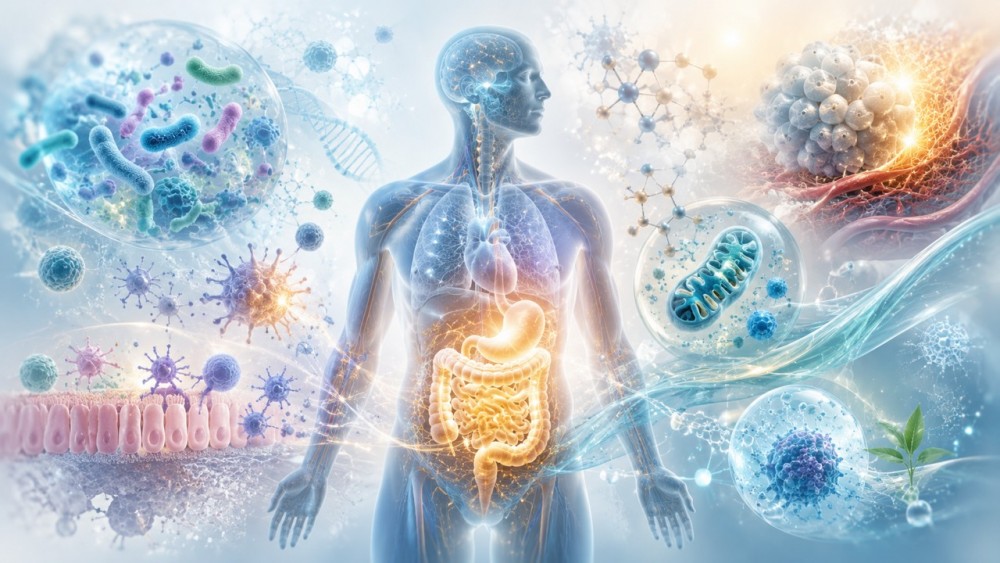
From this perspective, symptoms are not isolated elements, but signals of a disturbed biological network: microbiome, inflammation, metabolism, immunity, hormones, nutritional status, oxidative stress, mitochondria, and regenerative capacity.
The Four Pillars of the NutriMedX Approach
All the clinical areas addressed at NutriMedX — whether we are discussing the gut microbiome, chronic bloating, SIBO, histamine intolerance, insulin resistance, polycystic ovary syndrome, endometriosis, Hashimoto’s thyroiditis, or biological longevity — fit into an integrated pathophysiological matrix structured around four fundamental pillars:
These pillars are not separate compartments. They influence one another and explain why a patient may simultaneously present digestive, metabolic, hormonal, inflammatory, neuropsychological, and regenerative-capacity-related symptoms.
Pillar 1: The Gut Microbiome — The Foundation of the Internal Ecosystem
The gut microbiome — the community of microorganisms colonizing the gastrointestinal tract — is not a peripheral element of health. It is a central biological system, with functions extending far beyond digestion.
The microbiome participates in the regulation of systemic immunity, the maintenance of the intestinal barrier, the production of metabolites with anti-inflammatory roles, communication between the gut and the brain, bile acid metabolism, modulation of glucose and lipid metabolism, and steroid hormone metabolism.
A significant proportion of the immune system is associated with the intestinal mucosa, and a large part of peripheral serotonin is produced at the intestinal level. In addition, gut bacteria produce short-chain fatty acids such as butyrate, which support epithelial integrity, exert anti-inflammatory effects, and modulate immune responses.
Dysbiosis — an imbalance in the composition and function of the microbiome — may represent a causal, contributing, or aggravating factor in many conditions addressed in functional medicine.
In SIBO and chronic bloating, bacterial overgrowth in the small intestine and abnormal fermentation of dietary substrates may generate gas, abdominal distension, pain, diarrhea, constipation, postprandial discomfort, and multiple food intolerances.
In histamine intolerance, certain bacteria may produce histamine, while others contribute to its degradation. An imbalanced microbiome may promote the accumulation of endogenous histamine and contribute to apparently allergic symptoms: skin rashes, pruritus, headache, palpitations, digestive symptoms, nasal congestion, anxiety, or insomnia.
In polycystic ovary syndrome (PCOS), dysbiosis may contribute to insulin resistance, hyperandrogenism, and low-grade inflammation through documented inflammatory and metabolic mechanisms.
In endometriosis, recent data suggest that both the gut microbiome and the genital tract microbiome may influence disease progression through modulation of pelvic inflammation, estrogen metabolism, and local immune responses.
In Hashimoto’s thyroiditis and other autoimmune diseases, increased intestinal permeability may allow the translocation of bacterial antigens and persistent immune activation, contributing to the maintenance of inflammation and autoimmune reactivity in susceptible individuals.
In biological aging, age-associated changes in microbiome composition — reduced diversity, loss of butyrate-producing bacteria, and increased abundance of bacteria with pro-inflammatory potential — may contribute to the phenomenon of inflammaging.
From this perspective, the microbiome is both an indicator of health status and an important therapeutic target when assessed and interpreted in clinical context.
Pillar 2: Chronic Inflammation — The Common Substrate of Chronic Disease
Acute inflammation is a protective response, essential for survival. It occurs in response to infections, trauma, or tissue injury and serves to limit damage and initiate healing.
Chronic low-grade inflammation is entirely different. It is persistent, subclinical inflammation — insufficient to produce a classical inflammatory diagnosis, but sufficient to disturb cellular, metabolic, immune, and hormonal function.
The term inflammaging, introduced to describe chronic inflammation associated with aging, captures the essence of this phenomenon: a systemic background inflammatory state, sustained by multiple sources and with cumulative tissue consequences over time.
Clinically relevant sources of chronic low-grade inflammation include:
Gut dysbiosis and increased intestinal permeability
The translocation of bacterial fragments such as lipopolysaccharides into the circulation may activate innate immune receptors and trigger the production of pro-inflammatory cytokines. This is one of the mechanisms involved in low-grade metabolic endotoxemia.
Cellular senescence
Senescent cells no longer function normally, but may remain metabolically active and secrete a complex pro-inflammatory phenotype known as SASP — senescence-associated secretory phenotype. This contributes to tissue inflammation and deterioration of the cellular microenvironment.
Visceral adiposity
Visceral adipose tissue is an active endocrine organ, not merely an energy storage depot. It secretes adipokines and inflammatory mediators that may contribute to insulin resistance, systemic inflammation, fatty liver disease, and cardiometabolic risk.
Unresolved chronic stress
Prolonged activation of the hypothalamic-pituitary-adrenal axis disrupts cortisol rhythm, sleep, digestion, immune regulation, and metabolism. Chronic stress is not merely a psychological state, but a biological factor with systemic effects.
Mitochondrial dysfunction
Damaged mitochondria may increase the production of reactive oxygen species and release cellular danger signals, contributing to the activation of the NLRP3 inflammasome and other inflammatory pathways.
Chronic low-grade inflammation is a common substrate of insulin resistance, cardiovascular disease, fatty liver disease, neurodegeneration, sarcopenia, endometriosis, autoimmune diseases, and accelerated biological aging.
Identifying and reducing the sources of chronic inflammation represents a transversal therapeutic strategy, with potential impact across multiple areas of pathology simultaneously.
Pillar 3: Metabolism — The Energy and Hormonal Efficiency of the Cell
Metabolism, in the broad sense used in functional medicine, extends beyond blood glucose and cholesterol. It encompasses the processes through which the cell produces, uses, and stores energy, responds to hormonal signals, and maintains biochemical homeostasis.
Insulin resistance is one of the central metabolic disturbances of the modern era. Present subclinically for years or even decades before the onset of type 2 diabetes, it generates compensatory hyperinsulinemia with systemic consequences.
Insulin resistance may contribute to:
- stimulation of ovarian androgen production — an important mechanism in PCOS;
- chronic activation of the mTORC1 pathway, with effects on autophagy and cellular metabolism;
- amplification of systemic inflammation;
- promotion of fatty liver disease;
- increased visceral adiposity;
- difficulty losing weight;
- increased cardiovascular risk;
- ovulatory dysfunction and metabolic infertility;
- postprandial fatigue and energy fluctuations.
Estrogen metabolism — relevant to endometriosis, PCOS, premenstrual syndrome, perimenopausal symptoms, and certain hormone-dependent risks — is partly regulated by the microbiome through what the literature calls the estrobolome: the collection of microbial genes involved in estrogen metabolism. An imbalanced estrobolome may favor estrogen recirculation and contribute to hormonal imbalances in susceptible individuals.
Mitochondrial function — ATP production, cellular oxidative status, mitochondrial biogenesis, and energetic adaptability — represents the energetic foundation of all biological processes. Mitochondrial dysfunction may manifest clinically as chronic fatigue, exercise intolerance, poor recovery, insulin resistance, and accelerated cellular aging.
Integrated hormonal axes — the hypothalamic-pituitary-adrenal, hypothalamic-pituitary-thyroid, and hypothalamic-pituitary-gonadal axes — do not function independently. Disturbance in one axis influences the others. Chronic cortisol dysregulation may influence thyroid function. Insulin resistance may disrupt gonadal axes. Chronic inflammation may interfere with all these hormonal axes simultaneously.
From this perspective, metabolism is not a list of laboratory results, but the network through which the body transforms nutritional, hormonal, and immune information into biological function.
Pillar 4: Biological Regeneration — The Capacity for Tissue Repair
Biological regeneration is not the exclusive domain of aesthetic medicine or luxury interventions. It is the fundamental capacity of the organism to repair, renew, and maintain cellular and tissue structures — a capacity that progressively declines with age and can be influenced through correctly selected biological, metabolic, and nutritional interventions.
Biological regeneration must not be confused with promises of spectacular rejuvenation. It means supporting the body’s natural mechanisms of repair and adaptation.
Autophagy — the process of cellular “cleaning” through which cells degrade and recycle damaged components — is a central mechanism of cellular regeneration, with documented roles in longevity, neuroprotection, and metabolic homeostasis. Physical activity, moderate caloric restriction, controlled periods of fasting, and certain pharmacological interventions evaluated in specific clinical contexts may influence this pathway.
Tissue stem cells — present in most organs as a regenerative reserve — progressively lose functional capacity with age. Maintaining the stem cell niche through reduction of inflammation, metabolic optimization, correction of nutritional deficiencies, and support of the tissue microenvironment represents an active direction of research and carefully monitored clinical application.
DNA repair — including base excision repair, nucleotide excision repair, and double-strand break repair — depends on the energetic and metabolic status of the cell. NAD⁺ metabolism is involved in the activity of enzymes such as PARPs and sirtuins and represents an active area of research in the biology of aging, cellular repair, and longevity.
Restoration of the intestinal barrier is an often overlooked component of biological regeneration. It involves the restoration of tight junctions in the intestinal epithelium, repair of the mucus layer, reduction of mucosal inflammation, and increased production of protective metabolites such as butyrate. Nutrients such as glutamine, zinc, polyphenols, and interventions that support butyrate-producing bacteria may play a role in maintaining intestinal integrity, depending on the clinical context.
Correctly understood, regenerative medicine is not a medicine of miracles, but a medicine of the body’s ability to repair itself when the biological obstacles that block repair are removed: chronic inflammation, dysbiosis, insulin resistance, oxidative stress, nutritional deficiencies, sedentary behavior, and insufficient sleep.
Why These Conditions Belong to the Same Approach
Looking at the four pillars, it becomes clear why apparently disparate conditions — bloating, SIBO, histamine intolerance, PCOS, endometriosis, Hashimoto’s thyroiditis, chronic fatigue, insulin resistance, or biological longevity — may be addressed within the same medical approach.
Not because they are the same disease.
Not because they require the same treatment plan.
But because they share common biological mechanisms.
Chronic bloating and SIBO are expressions of gut dysbiosis, dysmotility, abnormal fermentation, mucosal inflammation, and altered individual digestive tolerance — the pillars of microbiome and metabolism.
Histamine intolerance may result from dysbiosis involving an imbalance between histamine-producing and histamine-degrading bacteria, increased intestinal permeability, mucosal inflammation, and the exceeding of an individual tolerance threshold — the pillars of microbiome and inflammation.
Insulin resistance is a metabolic disturbance amplified by chronic inflammation, visceral adiposity, sedentary behavior, stress, insufficient sleep, and gut dysbiosis — the pillars of metabolism, inflammation, and microbiome.
Polycystic ovary syndrome (PCOS) integrates insulin resistance, dysbiosis, chronic low-grade inflammation, hyperandrogenism, and dysregulation of hormonal axes — all four pillars may be involved.
Endometriosis involves chronic pelvic inflammation, estrogen imbalance, immune dysfunction, chronic pain, oxidative stress, and, in some cases, disturbances of the gut or genital microbiome — the pillars of microbiome, inflammation, and metabolism.
Hashimoto’s thyroiditis is an autoimmune disease in which genetic susceptibility, intestinal permeability, dysbiosis, chronic inflammation, stress, and nutritional status may influence clinical evolution — the pillars of microbiome and inflammation, as well as hormonal metabolism.
Biological longevity represents the long-term sum of interactions among all four pillars: optimization of the microbiome, reduction of inflammaging, metabolic efficiency, maintenance of muscle mass, support of mitochondrial function, and preservation of regenerative capacity.
These conditions are not treated through a single recipe. They are evaluated through a common framework, and interventions are adapted to the dominant mechanisms identified in each patient.
The NutriMedX Approach — A Framework, Not a Recipe
Functional and regenerative medicine does not mean applying a standard protocol to all patients. It means using a systematic framework of evaluation — biological, metabolic, microbiomic, nutritional, and regenerative — applied individually, with interventions personalized according to the mechanisms identified.
A functional medicine consultation at NutriMedX always starts from three fundamental questions:
1. What biological mechanisms underlie this patient’s symptoms?
Not only what diagnosis the patient has, but what is happening at the cellular, molecular, metabolic, inflammatory, digestive, hormonal, and nutritional level.
2. What factors initiated and perpetuate these mechanisms?
Nutrition, dysbiosis, chronic stress, sleep disturbances, toxic exposures, nutritional deficiencies, hormonal dysfunctions, sedentary behavior, genetic and epigenetic factors.
3. Which interventions, in what order and with what intensity, address these mechanisms most effectively in this specific person?
Not what works “in general,” but what is optimal for the patient’s individual biological profile.
The answers to these questions generate a personalized therapeutic plan, which may include nutritional interventions, microbiome modulation, metabolic optimization, targeted supplementation, lifestyle modifications, and, when appropriate, integrated medical treatment.
This approach does not replace conventional medical diagnosis and treatment, but complements them when the clinical picture is complex, chronic, or multifactorial.
Conclusions
Functional and regenerative medicine is not a medicine of quick promises and it is not an alternative to conventional medicine. It is an integrative perspective that views the patient as a complex biological system, not as a simple collection of compartmentalized organs, laboratory results, and symptoms.
The microbiome, chronic inflammation, metabolism, and biological regeneration are not separate topics. They are the pillars of the same construction: the biological health of a complex organism whose components continuously influence one another.
Understanding these interactions and being able to intervene precisely, personally, and at the level of mechanisms — not only symptoms — represents the essence of functional and regenerative medicine as practiced at NutriMedX.
All the articles published in this series — on the microbiome, SIBO, bloating, histamine, insulin resistance, PCOS, endometriosis, Hashimoto’s thyroiditis, and biological longevity — are chapters of the same medical approach.
This introduction is the key through which they can be read together.